One of my favorite things about traveling to Maine to work as a CRNA was the opportunity to experience a new place. I had never visited Maine before in any capacity, and living there for ten months while I worked out my contract was a way to immerse myself in different regional culture in the United States. It made me realize how blessed we are to live in such an expansive country with diverse populations and regional geography.
It was a season of personal firsts. The first time that I had ever rented a car by myself, and the first time that I was away from my husband and home for an extended period of time. The first thing I noticed when I arrived in early August was how late the sun set and how the beautiful pinks and blues reflected off of the high cirrus clouds for what seemed like forever until they melted into the blue hour of twilight. I could understand why there is such an outdoor aesthetic in the state known as Vacationland.
There were some interesting differences that I noticed right away that went beyond stretching myself personally. Maine is a state that is surrounded by Canada, specifically the Province of Quebec. I learned that it was common for people to speak both French and English fluently. The Quebecois migrated down to work in the factories in Lewiston and the surrounding areas when there were operational factories and before the decline in manufacturing in general across the United States. It was common to hear French being spoken in the hospital where I worked, or the grocery store. Our chief anesthetist’s first language was French. She learned English at the age of nine. Many directional signs are printed in both English and French. I noticed this when I took a walk on the Riverwalk Trail next to the Androscoggin River which connects Lewiston and Auburn. Two separate cities connected by the trail that I heard locals refer to as the LA of the East.
I learned that Irish last names were usually connected to factory bosses and that French last names were the progeny of the “immigrant labor”. I never got the hang of pronouncing the French last names. If I tried to pronounce it the French way, I was inevitably corrected to an Anglo pronunciation. If I tried the Anglo, it was French. As a nurse in Pittsburgh, I can pronounce Eastern European names, which are short of vowels and heavy on consonants, with no problem at all, but throw a French sounding name at me, and I would butcher it nine out of ten times.
There are several ways I would describe Mainers: independent, resourceful, and stoic. Being from Pittsburgh, I am used to smiling at people I pass on the street or in the hallways of a hospital and most times having that smile returned. In Maine, that gets you treated with suspicion. I had the impression that they thought there was something wrong with me. The proper way to greet someone was with a cordial “good morning”, smile optional. This will earn you a “good morning” back, a cordial nod of the head, and a modicum of respect. The smile has to be earned.
While I was there, my husband came up to visit and we headed to Quebec City. I was told where to stay – The Fairmont Le Château Frontenac – with a warning to start the trip with a full tank of gas. That area of Maine is a wild place. Literally. There are moose crossing signs on the winding two lane roads and very few towns or people along the way. The trees changing color under the fall sunshine and reflecting off of the clear, calm lakes in mid-October was breathtaking. It was almost enough to make you forget that if something like an accident with the above-mentioned moose or a flat tire, it may be hours before help comes along.
I live in western Pennsylvania.The area in the commonwealth between Pittsburgh and Philadelphia is very rural, and there are some wonderful natural places to explore, but the Pennsylvania turnpike, Route 80 and close proximity to other states makes it easy to find a gas station. I have never felt more isolated than I did on that trip in the Eastern United States. It was awe-inspiring.
After crossing the Canadian border in a small, rural border crossing, we adjusted to highways marked in kilometers and road signs in French and English and made our way to the first town with a gas station, Saint Georges, Quebec. This was three and a half hours into our drive, making me very grateful that we listened to everyone who told us to make sure we had a full tank of gas.
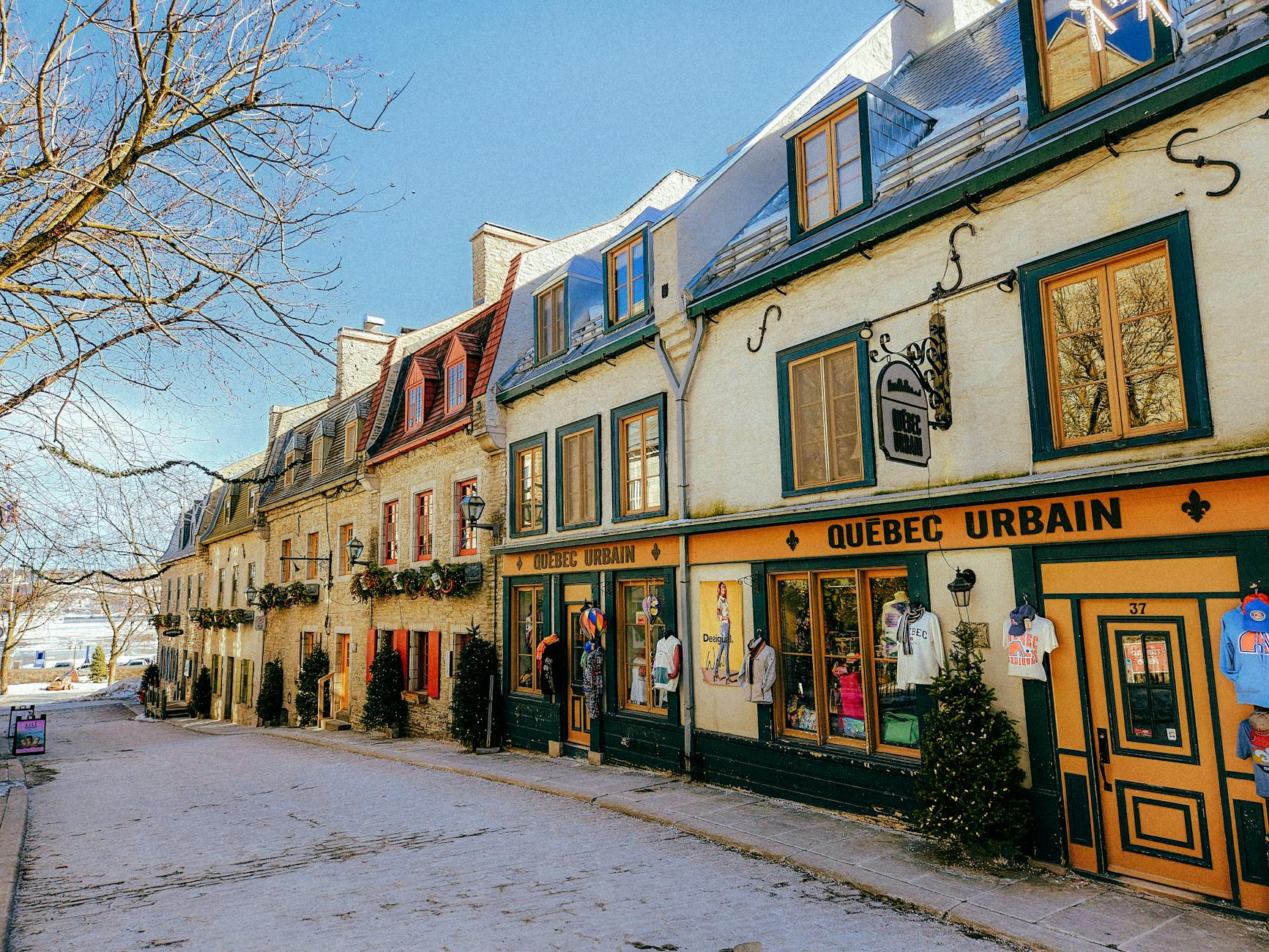
We arrived in Quebec City after a five hour drive. It was enchanting. I felt like I was dropped in the midst of a fairy tale. We spent the weekend exploring one of the last walled cities left in the world, giving it the feel of a medieval European city, eating at French restaurants and walking along the cobbled streets. It is indeed the closest to feeling like you are visiting Europe while remaining in North America.
After a magical weekend, it was time to head back to Lewiston. Crossing back into the United States was not as easy as crossing into Canada. The US Customs officer at the border was very nice, but extremely thorough. We were driving a rental car, and I had to show the rental agreement, which was not in the glove compartment, but was sitting on the kitchen table in the apartment I was staying in back in Lewiston. I could feel my anxiety creeping in, but before it was able to paralyze all of my muscles and brain cells, the gentleman said. “Check your email for the rental agreement, as long as you have already opened it. There is no cell service here.” I fortunately did have it on my phone and after he examined it, we were able to proceed.
We again went through Saint Georges, Quebec, stopped for gas and made what I thought would be a quick stop at a McDonalds. This is where things get interesting. The McDonalds was located in a French speaking city and not a tourist town where most people are bilingual and speak English to accommodate American tourists. This McDonalds experience was eye-opening.
As an American, I have ordered from McDonalds for as long as I can remember. As a special treat when I was growing up, my dad would go through the drive through and order a dozen cheeseburgers on a weekend to share with all six of us children. It was a hangout in high school in my local community, a place where I took my children to celebrate birthdays and play in the ball pit when they were little. In other words, a place with which I was very familiar.
We walked in to order, and the menus were in French. I have been trying to learn French, but Duolingo does not have a lesson about ordering fast food. My husband was with me, but his knowledge of the French language doesn’t go past polite greetings. Everyone around us was French speaking, they were yelling order numbers in French. People were greeting each other and having conversations in their native language, as they should, but I felt out of place and intimidated. Thank goodness there are picture menus at a kiosk, and I didn’t have to embarrass myself at the counter trying to order in person. Understanding a language doesn’t necessarily mean you can speak it in any meaningful way, and I am still at the state where I have to translate in my head.This also makes it difficult. As I am translating the first few words in my head, the rest of what is being said has timed out of my short-term memory. Thankfully, at the very bottom of the touchscreen menu was a button that said, English. Relief washed over me, and I set the menu to English and ordered our meals. I probably could have ordered it by picture in the French menu, but being the “other,” the one that didn’t fit in, was so anxiety-provoking that I didn’t even feel comfortable trying. We placed our order in English without incident. I had time to translate our order number in French and was able to recognize it when it was called, pick it up at the counter with a quick merci, and quickly head back to the car.
My point is not that the rest of the world should speak English to accommodate me. My point was that if you come to the United States and don’t know the language, you should be given respect. Ordering from a McDonalds during a quick drive through of an unfamiliar town in a foreign country was intimidating and anxiety-producing. People who come here who learn the language, go to school at any level, and find jobs should be celebrated and treated with dignity and compassion.
After leaving that McDonalds, I vowed that I would stop and help any visitor who was in this country and needed help navigating someplace when a language barrier existed. I remember once when I was in Key West, and I saw a French couple attempting to use an ATM in the lobby of the hotel where we were staying. There was only an English and Spanish option. They were struggling, and I almost stopped and helped, but at the time, I was only armed with two years of high school French. I guess I thought they would make fun of me, or resent my intrusion. Looking back now, I regret that. I realize now that I didn’t have to have the perfect accent or all of the correct words. All I needed was a sincere desire to help someone who was struggling and we probably would have muddled through. It is a mistake I will never make again, and I hope that if I am traveling and find myself in a situation where everything is unintelligible to me, that someone will stop and help me.
That is why we are here, isn’t it? To recognize the humanity in each person, and respond to that, not our own egos, preconceived notions or doubts. We are here to respond to each other’s humanity and lift each other up. Yet another personal lesson I learned while on a travel assignment in Maine.

 The Best Third